Quick take
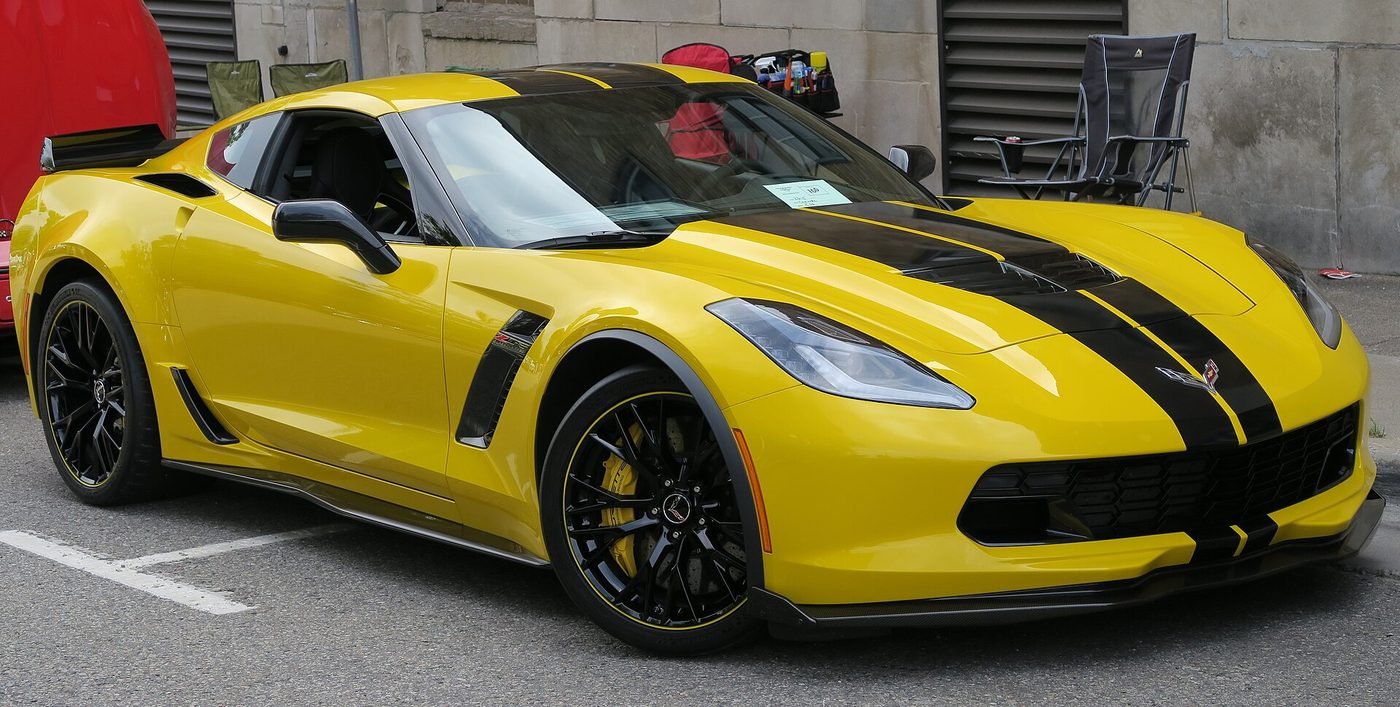
The 2015 Corvette is the second model year of the C7 generation, and it is the year the supercharged Z06 joined the Stingray. That means a 2015 listing might be a base Stingray, a Stingray with the Z51 performance package, or a Z06. They are different cars with different ownership risks, so find out exactly which one you are looking at before you compare prices.
Verify three things first. Confirm that the early-build recalls on this model year were completed. Drive any automatic car long enough to feel for a shudder at steady speeds. And inspect all four wheels for cracks, because owner complaints about them are common even on this early year. The recall list and complaint chart further down this page show the full picture.
What changed for 2015
The C7 generation started with the 2014 model year, so 2015 is an early car in a generation that ran through 2019. Its body and cabin are the same basic design as the 2014 car.
The headline addition for 2015 was the Z06, a supercharged version aimed at track-capable performance. The Stingray continued with its naturally aspirated V8, and the Z51 package remained the way to add performance hardware to it. Automatic Stingrays and Z06 models could be ordered with an eight-speed automatic, and a seven-speed manual was also available.
Because this was an early year, a few recalls were issued for cars built in a narrow window in late summer and fall of 2014. Those recalls only cover certain build dates. Do not assume they apply to every 2015 car, and do not assume a car is clear without checking its VIN.
Known trouble spots to check
NHTSA lists 65 owner complaints for this model year. The largest groups are the power train (18), wheels (12), fuel system (8) and engine (8). Treat those as your test-drive priorities. Complaints are not proof of how many cars are affected, and they mix Stingrays and Z06 cars, so use them to know where to look.
Power train. Owners of automatic cars describe a shake or shudder at light throttle and steady speeds, often compared to driving over a rough road surface. Some mention a hard or slow shift, a delay on downshifts and a lurch under load. Several say a dealer pointed to a service bulletin and recommended a fluid flush, and a few say the problem returned. One complaint blames the cylinder deactivation system and says disabling it helped. That is an owner's claim, but it is a good reason to ask whether the car has an aftermarket tune or a device that changes how the engine behaves. On the road, hold a steady 40 to 70 miles per hour with a light foot. It should feel smooth. Then roll on and off the throttle gently.
Wheels. Cracked wheels are the second biggest group, and several complaints specifically name Z06 cars. Owners describe a slow air leak, a tire pressure warning, and a crack on the inside of the rim, often on the rear. Some describe a repair by welding and then another crack. Ask to see all four wheels off the car if you can, or at least look at the inside barrel with a light. Ask whether any wheels were repaired, replaced or reimbursed.
Fuel system. Complaints describe a strong fuel smell in a closed garage, a slow-filling tank, and in a few cases a fuel gauge that read wrong before the car ran out of fuel. Smell around the rear of the car after a drive. Look at the garage floor or driveway where the car has been parked. Ask what fuel-system work has been done.
Engine. The complaints include a broken valve spring that ended in a damaged engine, a mention of a lifter problem, a radiator that failed on a low-mileage car, and a metallic warbling sound at light throttle. Listen on a cold start and at low rpm under light load. Ask for oil change records, and ask whether the engine has ever been opened.
General checks for a car like this:
- Infotainment and displays. Complaints mention a flickering center screen and a dead driver display, which can take the backup camera with it. Put the car in reverse and watch the screen for a while.
- The rearview mirror and windshield. A few complaints mention a mirror that glared at the driver and a windshield with stress cracks. Look at the glass from several angles.
Recalls on a car this age
Recall repairs are free at any Chevrolet dealer, and they stay with the car no matter how many owners it has had. Several recalls for this model year are build-window recalls, meaning they only cover certain cars built over a few days.
- Parking brake cables. A recall covers certain 2015 cars built from August 20 to September 4, 2014. Only one of the rear parking brake cables might be fully engaged, so the car could roll if parked on a steep hill.
- Driver airbag. A separate recall covers certain 2015 cars built from August 20 to August 27, 2014. The driver airbag module's back plate could fracture and let the airbag separate from the steering wheel.
- Rear suspension toe link. Another recall covers certain 2015 cars built from September 26 to October 2, 2014. The outer ball joint on the toe link may not have been tightened properly, and it could loosen and separate.
- Airbag software. Two airbag recalls cover Corvettes across several model years, 2014 to 2017, along with several other GM models. The software could run a diagnostic test during certain driving conditions, and during that test the frontal airbags and seat belt pretensioners might not deploy in a crash. The second recall exists because some cars that got the first repair may not have received the complete software update. A VIN check tells you whether yours was done.
None of these recalls covers every 2015 Corvette. Use NHTSA's free recall lookup with the car's VIN. If anything is open, ask the seller to have it fixed before you buy.
Test-drive checklist
- Start the car cold. Listen for ticking, rattling or a rough idle in the first minute. Watch for warning lights.
- Drive at a steady 40 to 70 miles per hour with a light throttle. In an automatic car, feel for any shudder or buzz that comes and goes.
- Accelerate hard from a stop, as far as is safe and legal. The car should pull cleanly without hesitation, surging or a warning message.
- On a manual car, check for clutch slipping in higher gears under load, a high or inconsistent pedal engagement point, and notchy shifts. A tuned or heavily driven car may feel different from stock.
- Brake firmly from highway speed. The car should stop straight with no pulsing pedal, no pull and no grinding. Look at the rotors for deep grooves or a heavy lip.
- Check tire wear across the whole tread. Uneven wear can point to alignment problems or hard driving. Check the date codes and ask how old the tires are.
- Watch the temperature gauge on a long drive, and leave the car idling for several minutes afterward. Look for leaks beneath it.
- Shine a light behind each wheel and inspect the inside of the rims for cracks or welding. Check for a slow-leaking tire and ask about the tire pressure warning history.
Before you hand over money
Get three things done before you buy:
- A VIN recall check, using the free NHTSA lookup above.
- A vehicle history report, to look for accidents, title problems and odometer issues.
- A pre-purchase inspection by an independent shop that works on Corvettes, with a look at the wheels, underbody, fuel system and transmission.
If the car is modified or tuned, ask direct questions. What was changed? Who did the work? Is there a dyno sheet or tune file, and can the car be returned to stock? Ask whether it has been tracked, and for receipts for brakes, fluids and tires. A good seller will answer plainly. A seller who dodges is giving you information too.
Then use the payment calculator to see what the car will cost each month with tax, fees and interest included.
Is it the right car for you?
A 2015 Stingray with Z51 suits a driver who wants a fast, usable weekend car and is willing to inspect carefully. The Z06 suits a buyer who wants more performance and understands that the wheel complaints and track-use history deserve extra attention. If you want to compare a later year, see the 2016 and 2017 pages, or the model overview.
Look elsewhere if you plan to drive the car daily over rough roads, if you want a car with no history of hard use, or if you cannot get an inspection from someone who knows these cars.
Bottom line
The 2015 Corvette can be a rewarding, quick used car, but the version, the build date and the owner's history matter a lot. Confirm the recalls by VIN, feel for transmission shudder, inspect every wheel, and ask hard questions about modifications and track use.