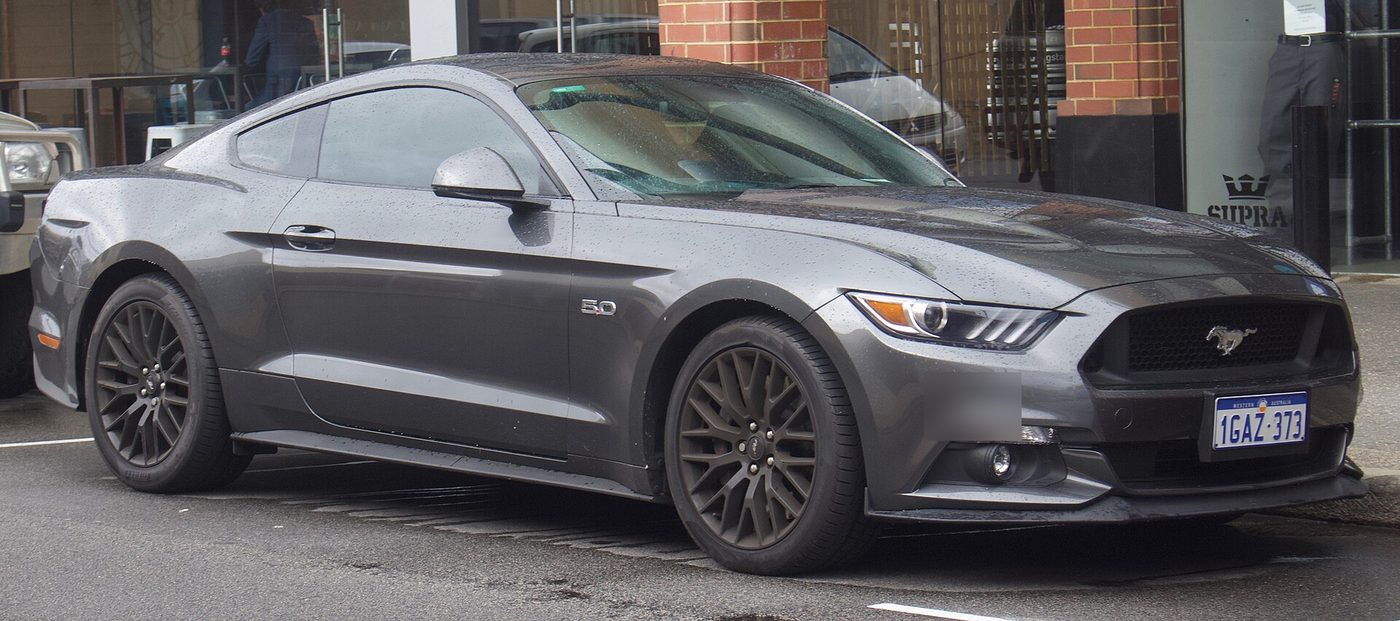
Quick take
The 2016 Mustang is the second year of the sixth generation, and it is the year the Shelby GT350 and GT350R appeared. Most used 2016 cars are EcoBoost, V6 or GT models, and the choice matters more here than on most cars, because the biggest complaints depend on the engine and transmission.
Check three things before you buy. If it is a 2.3-liter EcoBoost, look hard at coolant condition and engine records, because coolant getting into the cylinders is the top owner story for this year. Check that the rearview camera works and that its recalls are done. And if it is a manual or a modified car, confirm the clutch pedal assembly is solid and find out what has been done to the engine. The recall list and complaint chart below the article give the full picture.
What changed for 2016
This is a carryover year for the main lineup: the same body, the same engine choices (2.3-liter EcoBoost, V6 and 5.0-liter V8 GT) and the same independent rear suspension introduced for 2015. The big news was at the top of the range. The Shelby GT350 and its track-focused GT350R joined the lineup with a specially engineered V8, and they have a very different ownership profile from a base car.
When you compare years, note how the recalls overlap. The oil cooler hose, rearview camera and seat belt pretensioner recalls reach across 2015 to 2017 cars. The door latch recalls that appear on the 2015 list do not appear for 2016 in our data, even though owners still report latch problems. More on that below.
Known trouble spots to check
NHTSA has 380 complaints for the 2016 Mustang, with 13 crashes, 7 fires and 11 injuries in those records. It also lists 2 deaths, so read the details on NHTSA's site yourself if safety history matters to you. These are the biggest categories.
Engine, especially the 2.3-liter EcoBoost (76 complaints). This is the largest category, and the pattern is consistent. Owners describe coolant entering one or more cylinders, a misfire, white smoke or overheating, and in several cases an engine that needed major work at moderate mileage. One person says a head gasket failed at around 75,000 miles. We cannot say how many cars are affected, so treat it as a question to answer, not a certainty. Check the coolant reservoir when the engine is cold. Look for low coolant, an oily film, a sweet smell and rough running on a cold start. Ask when coolant was last topped up and why. Pay extra attention if the car has a performance tune.
Rearview camera and electrical (73 electrical, 52 camera). Many owners describe a blank, blue or distorted reverse screen, often intermittent. Several say a dealer replaced a harness and the problem came back, or that the part for the second recall was not yet available. Check the camera cold, warm and after opening and closing the trunk. A few also mention the trunk release failing at the same time, which fits a wiring problem at the lid.
Clutch pedal weld and the manual gearbox. In the "other" category (70), several owners say the clutch pedal assembly came apart at a welded joint and the car could not be shifted. Other manual owners describe a clunk going into gear, grinding between gears and an occasional lockout of third. Wiggle the pedal sideways with your foot and shift through every gear, including reverse.
Automatic and V6 quirk. One V6 owner describes a "not in park" warning followed by a shutdown that cleared once the shifter was moved to park. It is a single report, but it is worth a long drive in a V6 automatic, with several stops and starts.
Doors and latches (28 structure, 27 latches). Owners describe a door, usually the passenger side, slipping to its first catch at highway speed with the ajar light on. Some say a dealer told them their VIN was not covered by any recall. Do not assume a 2016 car got the same latch repair as a 2015. Drive on a highway, listen for wind noise and watch the dash.
Fuel system and brakes. Twenty complaints describe fuel odor, a cracked tank or filler area, or a vapor leak with an emissions code. Seventeen brake complaints include a pedal bumper that crumbles and leaves the brake lights on, which can drain the battery and trigger a reduced-power mode. Check the brake lights with the car off.
A few quick checks for any 2016:
- Look at the oil cooler lines for seepage. The oil cooler hose recall covers certain 2015 to 2017 cars built between February 2015 and August 2016.
- Smell near the fuel filler and the rear of the car after it has been parked.
- Make sure the airbag light goes out after start-up. A few owners describe airbags that did not deploy in a crash, so any warning light needs a diagnosis.
- On a GT350 or GT350R, follow the notes in the "Before you hand over money" section.
Recalls on a car this age
Our data lists five recalls for 2016. Two involve the rearview camera: one covers loose or damaged wiring on certain 2015 to 2017 Mustangs, and a 2025 recall covers a distorted or blank display on certain 2015 to 2019 cars. Another 2025 recall covers corrosion of the front seat belt pretensioner cables on certain 2015 to 2017 cars. A 2016 recall addresses an oil cooler hose that could separate and leak oil. The last covers front and rear belts and child seat anchors that may have been damaged in shipping, on 2016 cars built across a few days in late September and early October 2015.
Several of these apply only to certain builds, so the VIN check is the only way to know. Recall repairs are free at a Ford dealer. Run the VIN at NHTSA's free recall lookup and keep the paperwork. Some owners report that a first repair did not last or that parts were delayed.
Test-drive checklist
- Start the engine cold. Listen for misfire, rough idle and ticking, and watch the exhaust for white smoke.
- With the engine cool, check the coolant reservoir level and color, and look for an oily film.
- On a manual, test the clutch for slipping, sideways wobble in the pedal and a clunk going into gear. Shift into third repeatedly.
- On an automatic, make several low-speed stops and starts and watch for harsh engagement or warning messages.
- Drive on the highway. Listen for wind from the doors and watch for a door ajar light.
- Put it in reverse and check the camera. Open and close the trunk and try the release.
- Brake hard once from a safe speed. Look for pulling, vibration or a soft pedal.
- Park, shut it down, check the brake lights from behind, then look under the car for drips.
Before you hand over money
Do the VIN recall check, get a vehicle history report and pay for an independent inspection, preferably by someone who knows the 2.3-liter engine. Ask whether a compression or leak-down test and a cooling system check are possible.
For a modified or tuned car, ask what tune is loaded, who wrote it and whether the stock tune is available. Ask whether the clutch, intercooler, intake or exhaust has been changed, and whether the car has done track days. Track use is hard on brake fluid, tires and cooling parts, so ask for service records after each event. A car with unknown modifications is a risk, and it should be priced like one.
If it is a GT350 or GT350R, expect a different engine from the rest of the range and a higher chance of hard use. One complaint on file describes a fire in a GT350. That is a single report, so treat it as a reason to ask questions, not a verdict. Ask for dealer service history and track use, and have a shop that knows the model inspect it. The GT350R is even more focused and less suited to daily comfort.
Then run numbers with the payment calculator so you know what the car costs per month.
Is it the right car for you?
The 2016 Mustang suits buyers who want a modern Mustang with a lot of choice, from an easy daily EcoBoost to a GT and a rare Shelby. It is a good fit if you will pay for a proper inspection and keep records.
It is a poor fit if you want a carefree commuter and do not want to research an engine with a known complaint pattern. If you want to compare it with the first year, see the 2015 Mustang. For the full generation story, see the Mustang overview.
Bottom line
A 2016 Mustang can be a strong, fun used car, but the 2.3-liter coolant complaints, camera problems and door latch reports mean you should shop with a checklist. Pick the engine you can verify, check the recalls by VIN and let a mechanic confirm the details before you pay.