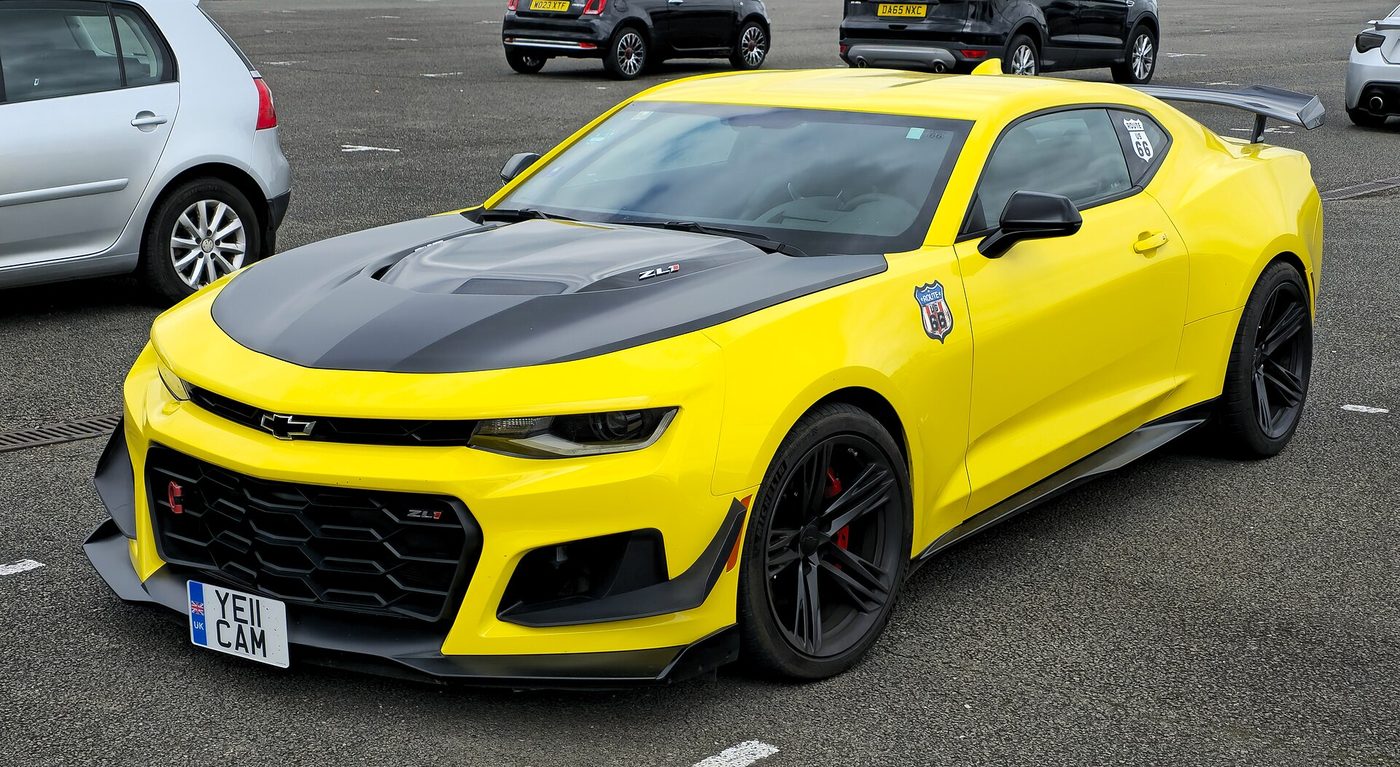
Quick take
The 2018 Camaro is a late-stage version of the original sixth-generation design, a year before the facelift. It has far fewer complaints in our data than 2016 or 2017 (81 total, with 5 crashes, 4 fires and 5 injuries reported), but the same themes still run through it: electrical trouble, steering assist loss and transmission shudder.
It suits buyers who want a rear-drive performance car and would rather shop a car with a few more production years behind it. Verify three things: the status of the power steering recall by VIN, whether the trunk area has ever taken on water, and how the automatic behaves at steady speeds. If the car is an SS, a 1LE or a ZL1, add a fourth: how hard it has been driven.
What changed for 2018
The 2018 car is the third model year of the sixth generation and broadly the same machine as the 2017. The range still covered the turbocharged four-cylinder, the V6, the V8 SS and the supercharged ZL1, in coupe and convertible form, with the 1LE package offered on several of them. The ZL1 line also gained a 1LE version for this model year, aimed at track use.
Most of what separates a 2018 from a 2017 is time rather than redesign. The lower complaint count may partly reflect time, since newer cars have had fewer years of ownership to accumulate reports, so do not read the count as proof of a problem-free year.
Because the 2019 car got a facelift, the 2018 is the last of the original look. Shoppers who prefer that front end may lean toward this year.
Known trouble spots to check
Electrical system (20 complaints). This is the top group, and water is the dominant theme. Several owners describe water collecting in the trunk and rear compartment, reaching the fuse box, the factory amplifier and the battery area. Some describe melted relays or wiring, a car that shut down and could not restart, and a side object detection module that shorted out. Others mention the shift-to-park message when the car is already in park, which can keep the car partly powered and drain the battery. A convertible owner reports a rear window seal failing, and a few mention dead USB ports or failing sensors.
How to check: lift the trunk floor and inspect the whole rear area for water marks, rust, corrosion on connectors and a musty smell. Look closely at wiring for repairs or splices. Check the blind spot warning, tire pressure monitoring and USB ports. Park the car, shut it off, and see that the dash goes fully dark with no "shift to park" message.
Steering (18 complaints). Owners describe losing power assist suddenly, often in a turn or at low speed, with a dash message about service. One report mentions gauges dropping to zero at the same moment. Several owners say they checked and their VIN was not part of the recall, and at least one repaired the car at their own expense. Two reports describe failures on cars with low mileage.
How to check: turn the wheel lock to lock repeatedly in a parking lot, with the car stopped and with it moving slowly. Drive the car after it is fully warm. Ask for recall completion paperwork, and do not rely on the seller's word.
Power train (17 complaints). Owners describe vibration and shudder at steady cruising speeds, an RPM needle that wanders, harsh shifts and a car that seems to lack smoothness. One owner cites a service bulletin number and had the problem at under 30,000 miles. The 2018 car also appears in the reports with a failed transmission control or limp mode.
How to check: hold a steady city to highway speeds and watch the tachometer for a wobble. Feel for a pulse through the pedal and seat. Ask when the transmission fluid was last serviced and what fluid was used.
Engine (15 complaints). A mix of power loss, shudder and stalling complaints. Pull a scan for stored codes and ask about any misfire history.
Other groups in the data: structure (6), fuel and propulsion (5), air bags (4), visibility (4) and electronic stability control (4).
General checks for a car like this:
- Convertible top: operate it several times, check the rear glass seam and look for water leaks inside.
- Tires: check date codes and tread wear. Uneven wear can point to alignment problems or hard use.
- Brakes: look at rotor condition and listen for noise. Track-used cars may have glazed or heat-cycled rotors.
- Cooling: check coolant condition, hoses and fan operation.
- Underbody: look for damage from low-speed scrapes or curb strikes.
Recalls on a car this age
The data lists two recalls for the 2018 Camaro.
- Electric power steering assist (issued 2025). It covers certain 2016 to 2018 Cadillac CTS, certain 2017 to 2018 Cadillac ATS, and certain Chevrolet Camaro and Corvette vehicles. Power assist can quit, which makes the wheel hard to turn. Only listed VINs are included, and several 2018 owners say their cars were not.
- Air bag emblem (issued 2021). It covers certain 2017 to 2021 Camaros. A plastic badge on the driver air bag cover can come apart and fly off when the bag inflates.
Recall repairs are free at any Chevrolet dealer. Run the VIN at NHTSA's free recall lookup, then ask the seller for proof that any open items were completed.
Test-drive checklist
- Start cold. Check for dash messages, rough idle or a slow crank.
- Do parking-lot lock-to-lock turns several times and watch for steering heaviness or a service message.
- Hold steady speeds between city to highway speeds and look for vibration or a wandering tachometer.
- Accelerate firmly, then let the car downshift. Note any harsh, slow or odd shifts.
- Brake firmly from speed. The car should stop straight, with no pulsation or grinding.
- Shut the car off in park and confirm there is no shift-to-park message and no leftover power draw.
- On a manual car, test clutch engagement and slipping in a higher gear under load.
- Open the trunk and the convertible top if there is one, and look for moisture.
Before you hand over money
Run the VIN for recalls, get a vehicle history report and pay an independent shop that works on rear-drive performance cars to inspect the car. Ask them to scan for codes, look at the trunk electrical area and road test the steering.
If the car has been modified, ask:
- What has been changed, and who did the work?
- Is there a tune, and can the original calibration be restored?
- Has the car been on a track or drag strip?
- What are the tires and pads, and when were fluids last changed?
Run the monthly cost with the payment calculator. It is also worth comparing the 2017 and 2019 reports.
Is it the right car for you?
It fits buyers who want the original sixth-generation styling with a lower complaint count than the first two years. It is a poor match if you cannot confirm steering recall status, if a possible transmission shudder would be a deal-breaker, or if you plan to leave a convertible parked outside without checking for leaks.
Bottom line
The 2018 Camaro looks like a safer pick than the first two years on paper, but it shares their weak spots. Test the steering and transmission, check the trunk for water, confirm recalls by VIN, and ask frank questions about modifications and track use.