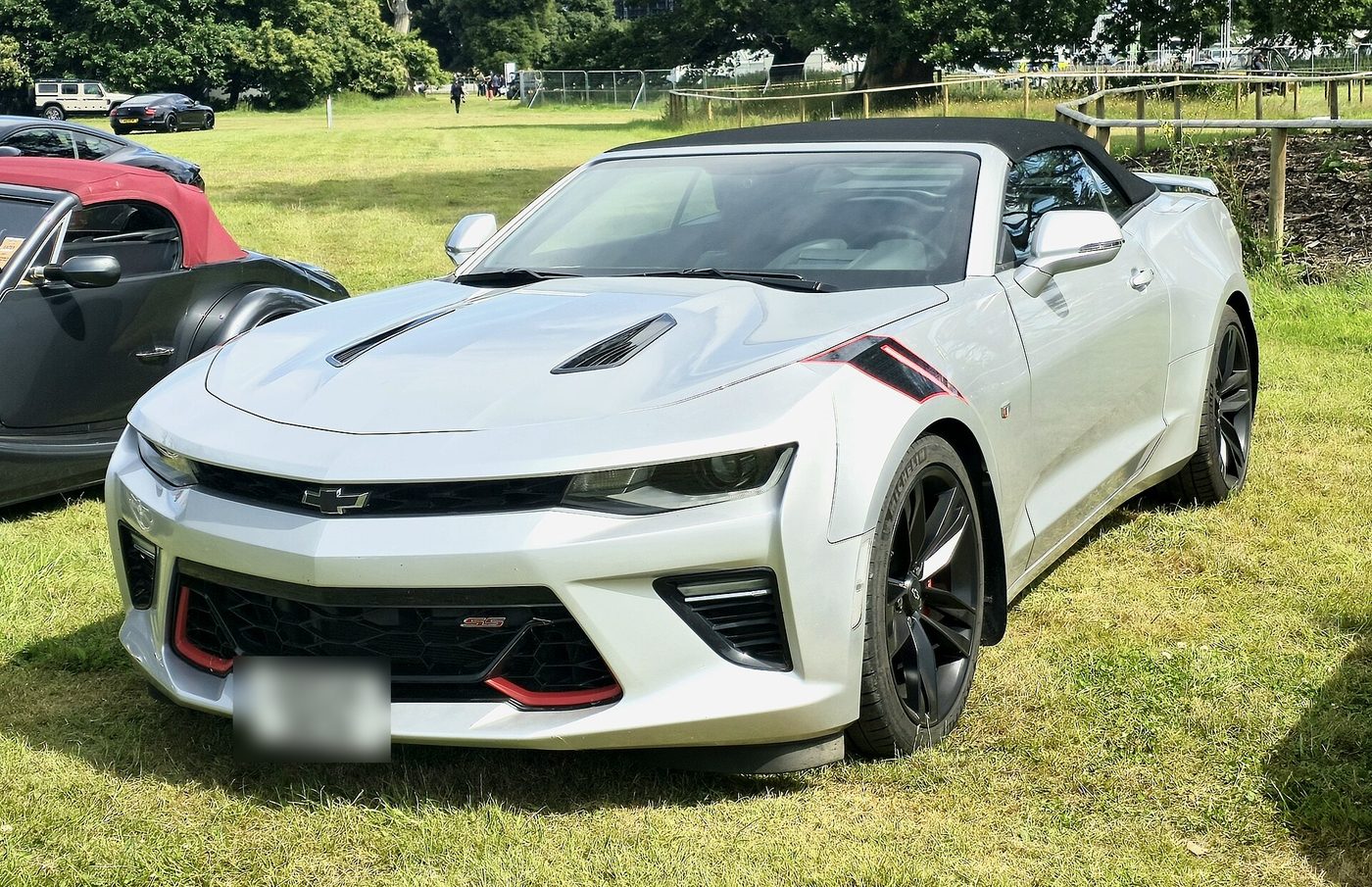
Quick take
The 2017 Camaro is the second year of the sixth generation, and it is the year with the most owner complaints in our data: 190, with 13 crashes and 8 injuries reported (no deaths). That is not a reason to walk away. It is a reason to know which systems to test, because the two biggest groups are steering and the automatic transmission.
Verify three things before you buy. Find out whether the car's VIN is covered by the electric power steering recalls, and whether the repair was done. Test the automatic for shudder and harsh shifts. And learn how the car has been used, because this year includes the V8 SS, the new-for-2017 ZL1 and the 1LE cars, which tend to attract hard driving and modifications.
What changed for 2017
The 2017 car carried over the 2016 design, so it is the same lighter, rear-drive Camaro. Chevrolet's lineup now stretched from the turbocharged four-cylinder and V6 up through the SS to the supercharged ZL1, which joined the generation for this model year. Coupe and convertible bodies were offered, and the 1LE track-oriented package was available on several versions.
Compared with 2016, the main story is a bigger range and a larger pool of cars to choose from. It is also the year the steering assist problem starts to show up strongly in the complaint record, and it is covered by recalls that mention 2016 to 2018 cars.
If you are looking at a ZL1 or an SS with the 1LE package, expect more careful ownership questions than with a V6 coupe. These cars are often driven harder and are more likely to carry wheels, tires, exhaust and tune changes.
Known trouble spots to check
Steering (58 complaints). This is the top group, and it is easy to describe. Owners report a sudden loss of power assist, often with a message on the dash telling the driver to drive carefully or that power steering needs service. The wheel becomes very heavy, sometimes on a sharp or slow turn, and some cars recover after being turned off and on again. Several owners say it happens again and again. A number say their VIN was not covered by the recall they found, and some paid for a repair themselves. Some mention a loss of electrical power at the same time.
How to check: in a parking lot, turn the wheel lock to lock many times, both ways, slowly and with the car moving. Repeat after the car is fully warm. Watch the dash for steering messages. Ask for dealer paperwork showing the recall repair was done, and do not accept "it should be fine."
Power train (54 complaints). Owners describe a shudder like driving over rumble strips, vibration across a wide speed range, harsh or erratic shifts, and a sticking shift solenoid that forced one car into a limp mode. Several owners say the torque converter and fluid were the focus of dealer work. One mentions a service bulletin by number. Some say the problem started almost as soon as they bought the car, and some say a fluid change helped only briefly.
How to check: drive at steady speeds from city to highway speeds and hold the throttle light. Feel through the wheel and seat. Make several stops and starts, in both drive and reverse. Ask for records of transmission fluid service and any converter work.
Electrical system (25 complaints) and engine (25 complaints). Electrical reports include power loss while driving, hot-start problems, an air bag light that stays on, a shift-to-park message when already in park, and trunk area water. Engine reports include a thermostat failing early on one car, misfires, a loss of power and a stalled car.
How to check: have the shop scan for stored codes. Open the trunk and look for dampness. Test every screen, camera and button.
Other groups in the data: visibility and wiper (15, mostly windshield fogging and convertible rear glass trouble), air bags (12), service brakes (11), electronic stability control (6) and structure (5). Convertible owners describe the rear glass pulling away from the fabric top and top mechanism noises.
General checks for a car like this:
- Wheels and tires: look for bends, cracks and uneven wear, plus mixed brands.
- Brakes: check pad and rotor wear, and press the pedal firm at speed. One owner reports a lost brake pedal, so test pedal feel carefully.
- Cooling: check coolant level and the fan operation.
- Convertible: operate the top several times, look at the glass seam and check for leaks.
- Rear differential: listen for whine and clunks, and ask about fluid service.
Recalls on a car this age
The data lists three recalls for the 2017 Camaro.
- Electric power steering (two campaigns, issued in 2019 and 2025). Both cover certain Cadillac and Chevrolet cars including the Camaro and Corvette, with years running from 2016 to 2018 depending on model. The power steering assist can fail, making the wheel hard to turn. Only certain vehicles are included in each, and owner complaints show that some cars that suffered the failure were outside the list. Check the VIN, and check it again, since coverage can change.
- Air bag emblem (2021). It covers certain 2017 to 2021 Camaros. A plastic badge on the driver air bag cover can come apart and fly off when the bag inflates. Some 2017 owners report the emblem striking them in a crash.
Recall repairs are free at a Chevrolet dealer for any owner. Run the VIN at NHTSA's free recall lookup, and ask the seller for the repair paperwork.
Test-drive checklist
- Start the car cold, and note any warning messages, rough idle or slow crank.
- Turn the steering lock to lock several times at parking speeds, then on the move. Heavy steering or a power steering message is a stop sign.
- Drive steadily from city to highway speeds, feeling for shudder or vibration through the wheel and seat.
- Accelerate firmly in a safe spot and note shift quality, then lift off and let it downshift. Look for flare, bangs or surging.
- Brake hard from highway speed. The pedal should feel firm and the car should stay straight.
- On a manual car, check the clutch, including slip in a high gear under load and any chatter on take-off.
- After a full warm-up, check temperature, fan operation and any smells.
- Run the air conditioning and defrost and watch for windshield fogging.
Before you hand over money
Get the VIN checked for recalls, a vehicle history report, and an independent pre-purchase inspection from a shop that knows performance cars. Ask for a code scan, a transmission fluid history and a look at the steering recall status.
For any modified car, ask:
- What parts were added, by whom, and are receipts available?
- Is there an engine or transmission tune, and is the stock calibration saved?
- Has the car been used on a track, in drag racing or at autocross?
- What tires and brake parts are on it now, and when were they changed?
Then run the numbers with the payment calculator. Compare this car with the 2016 and 2018 reports, and read the model overview.
Is it the right car for you?
It fits buyers who want a strong rear-drive performance car with a range of power levels, and who will verify the steering recall and the transmission before paying. Look elsewhere if a sudden loss of steering assist would be unacceptable to you, if you want the simplest possible ownership, or if you cannot get documents showing recall work was done.
Bottom line
The 2017 Camaro can be a rewarding car, but it carries the heaviest complaint load in this group. Treat steering and transmission behavior as deal-makers or deal-breakers, check recall status by VIN, and be open with the seller about modifications and use.