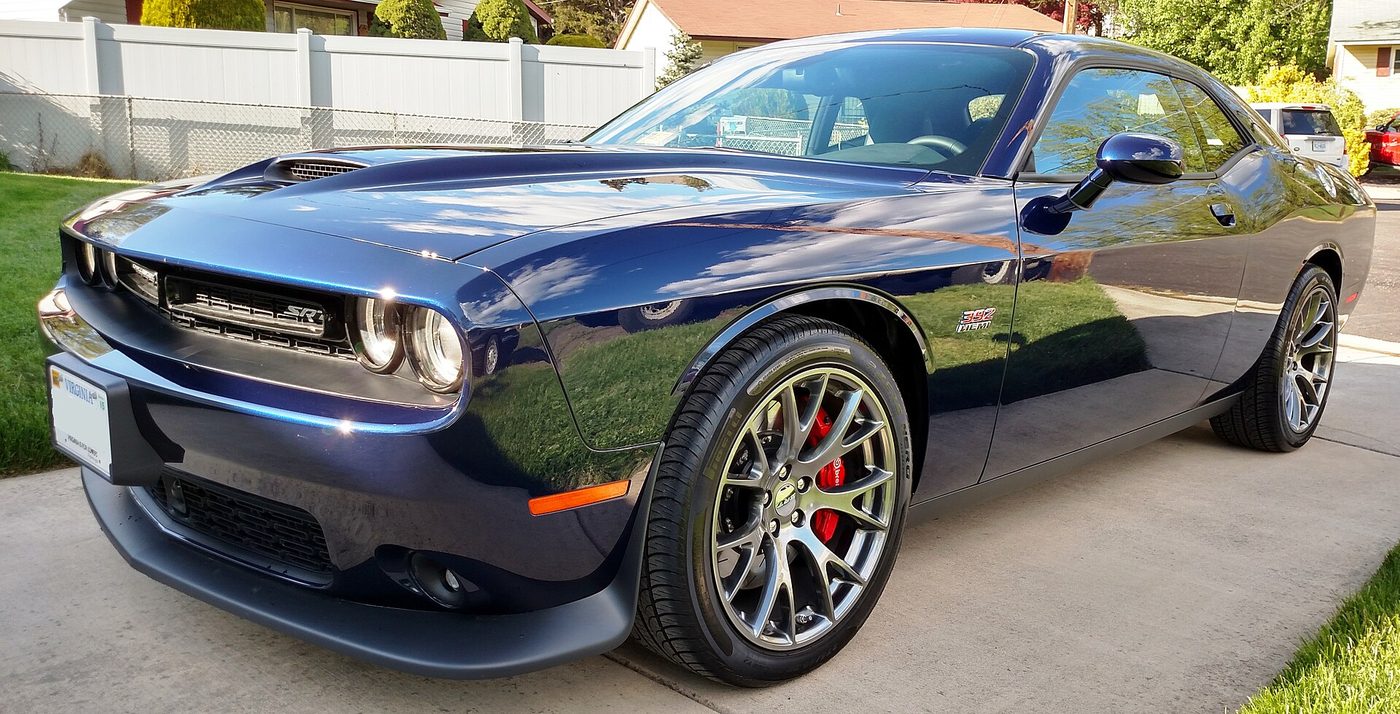
Quick take
The 2015 Challenger is the first year of the big refresh, and it is the year Dodge added the supercharged Hellcat to a lineup that also included V6 and V8 cars. If you want modern-feeling controls and an eight-speed automatic in a car with classic coupe looks, this is one of the cheapest ways in. It also has the highest complaint count of any Challenger year on this site, at 127 reports to NHTSA.
Three things deserve your attention. First, the driveline: owners describe driveshaft and center bearing failures, often announced by a knock or vibration from under the car. Second, the engine: ticking, misfires and valvetrain complaints show up on V6 and V8 cars alike. Third, the recall paperwork. This year has several recalls, and a number of them only apply to cars built in narrow date ranges or to specific versions, so a VIN check is not optional.
What changed for 2015
For 2015 the Challenger received new front and rear styling, a redesigned interior and a larger touchscreen option. The eight-speed automatic arrived, and a six-speed manual remained available on V8 cars. At the top of the range, the new SRT Hellcat brought a supercharged 6.2-liter V8. Below it sat the 6.4-liter SRT cars, the 5.7-liter R/T and the V6 SXT.
This was a mid-cycle refresh, not a new car. The basic LC platform carried over, so the underpinnings are familiar from earlier Challengers. Because the refresh was new, 2015 also carries a few recalls tied to early build dates. Those are the ones to look for first.
For context on the wider lineup, see the Challenger overview. If you are weighing this year against the next one, read the 2016 report too.
Known trouble spots to check
NHTSA's breakdown for this year lists power train (29 complaints), engine (26) and electrical system (26) at the top, followed by brakes (12), air bags (10) and fuel system (10). Here is what the patterns look like in plain terms.
Driveshaft and center bearing. The most repeated theme is a driveshaft problem: owners describe a knock, a rattle or a drop in the driveline, sometimes at fairly low mileage and on cars they say were stock. A few say the part is a single assembly that is hard to get, and that parts were scarce when they tried to repair it. On a test drive, listen for a rhythmic knock or hum from the middle of the car under light throttle. Feel for a vibration at highway speed that changes when you lift off. Look under the car with a flashlight for a sagging or rubbing driveshaft, and ask whether it has been replaced.
Engine ticking and misfires. Owners of both V8 and V6 cars describe ticking that does not go away, check engine lights with misfire codes, and in a couple of cases serious internal engine failures. A few attribute the noise to lifters or camshaft wear. Ticking by itself can be a quirk, but a tick combined with a misfire or low oil level is a red flag. Cold-start the car, listen for the first minute, then listen again when it is warm. Ask for oil change records and check the oil level and color.
Electrical glitches. The complaints here are varied: a flickering backup camera, warning lights for ABS and traction control coming on together, low-voltage messages, the dashboard shifter lights misbehaving, and a few reports of the car losing power while driving. Some owners mention the cabin blower failing. Run every function, watch the voltage and battery warnings, and make sure the camera works every time you shift into reverse.
Brakes and wheel speed sensors. Several owners say the ABS and traction control lights came on, with wheel speed sensors replaced more than once on some cars. Watch for those lights on a long drive, not just at startup.
Mileage misrepresentation. One complaint in this year's data alleges a large gap between the odometer reading at sale and the mileage later found on record. Treat that as a reason to check history reports and service records carefully, not as a trend.
General checks for any car like this:
- Look for fluid leaks under the engine and transmission.
- Check the trunk lid. Some owners report the lid falling because the struts are weak.
- Check that the heater and A/C both blow hot and cold on both sides.
- Scan for stored trouble codes before you buy, even if no light is on.
- Look at brake rotors for lips and heat marks, which point to hard use.
Recalls on a car this age
NHTSA lists six recalls for 2015, and they are not equal. Read them carefully:
- Side curtain air bag mounting bolt. Covers certain 2015 Challengers built from March 28 to April 1, 2015, where the driver's side curtain air bag may have a loose or missing rear bolt.
- Instrument cluster. Covers certain 2015 cars built from June 30 to October 8, 2014. The cluster may go dead, with gauges dropping to zero and the theft alarm light staying on.
- Fuel rail leak. Covers 2015 Challenger SRT and Charger SRT cars with the 6.2-liter supercharged engine, built from September 18, 2014 to February 5, 2015. A damaged seal or hose at the fuel rail may leak fuel. This one is for Hellcats built in that window, not for V6 or V8 cars.
- Radio software. Covers many FCA vehicles, including 2015 Challengers. The radio software could allow outside access to certain networked vehicle controls.
- Cruise control wiring. Covers 2015 to 2018 Challengers among many other models. A short circuit could stop the cruise control from switching off.
- Performance PCM kits. This is a separate recall for specific Mopar Stage 1 kit and Demon crate engine computers. It only matters if the car has one of those aftermarket parts fitted. A factory-stock car is not covered by it.
Recall repairs are free at a Dodge dealer, no matter how many owners the car has had. Run the VIN at NHTSA's recall lookup and ask the seller for proof that any open recalls were completed. If one of the narrow recalls applies to the car's build date, confirm the repair was done, because a missing air bag bolt or fuel leak is not something to leave until later.
Test-drive checklist
- Start the engine cold. Listen for ticking, knocking or rough running in the first minute, and watch for any check engine light that stays on.
- Accelerate gently from a stop, then harder. The automatic should shift cleanly. On a manual car, check that the clutch engages smoothly, does not slip in higher gears and does not chatter or shudder.
- At moderate cruising speed, listen and feel for driveline knocking or vibration. Repeat while lifting off the throttle.
- Brake hard from highway speed in a safe spot. The car should stop straight, with no pulsing, pull or ABS or traction lights.
- Turn the wheel fully each way at low speed. Listen for clunks and check that the steering stays smooth.
- Check tire wear across the whole tread. Uneven wear, mismatched brands or a car with brand new tires and no explanation deserve questions.
- Watch the temperature gauge for a full drive. After parking, check under the hood and under the car for coolant or oil.
- Try the backup camera, touchscreen, Bluetooth, power windows and heater in the same drive.
Before you hand over money
Do these three things before you commit:
- Check the VIN for recalls. Use the free NHTSA lookup linked above, because many 2015 recalls apply only to certain build dates.
- Get a vehicle history report. Look for accident, flood or salvage branding and odometer discrepancies.
- Pay for an independent pre-purchase inspection. Choose a shop that knows LC-platform Dodges, and ask them to check the driveshaft, engine noise, fluid leaks and stored codes.
On a Hellcat, 392 or other modified car, also ask about the engine computer tune, supercharger changes, exhaust, intake, rear gears, wheels and tires. Ask for dyno sheets or shop invoices, and ask whether the car has been to a drag strip or track. If the seller will not answer, treat that as an answer.
When you are ready to price a loan, use the payment calculator to see what the car costs per month after tax, fees and interest.
Is it the right car for you?
A 2015 V6 or 5.7-liter V8 suits someone who wants a comfortable, good-looking coupe for daily use and is prepared to inspect carefully. A Hellcat or 392 suits an experienced buyer who will pay for a thorough inspection and who understands that a performance car may have been used hard.
It is a poor fit if you want the lowest possible ownership risk, if you need a quiet-running engine with no ticking, or if you plan to track the car without budgeting for brakes, tires and cooling upgrades. If you are cross-shopping, a 2017 Challenger adds all-wheel-drive options but brings different complaints.
Bottom line
The 2015 Challenger offers the most dramatic range of trims in the refresh, but it also has the longest list of recalls and the highest complaint count. Verify the VIN, listen hard for driveline and engine noise, and put the car on a lift before you pay.